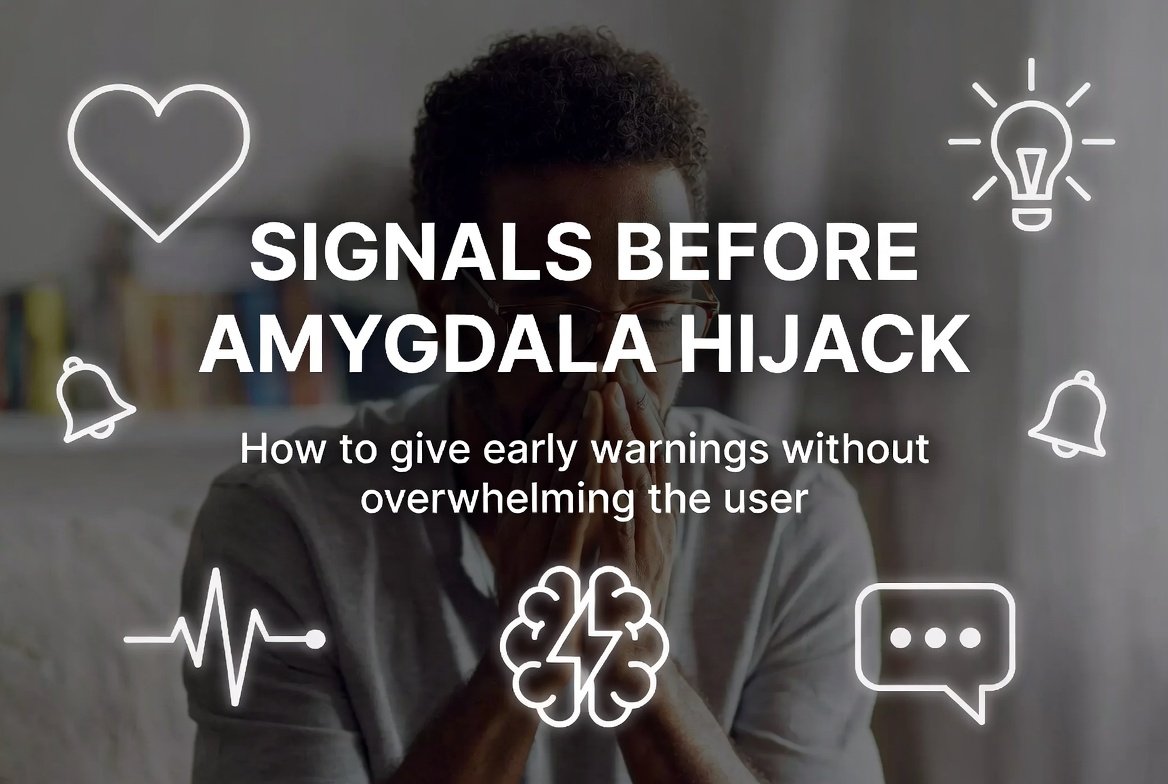
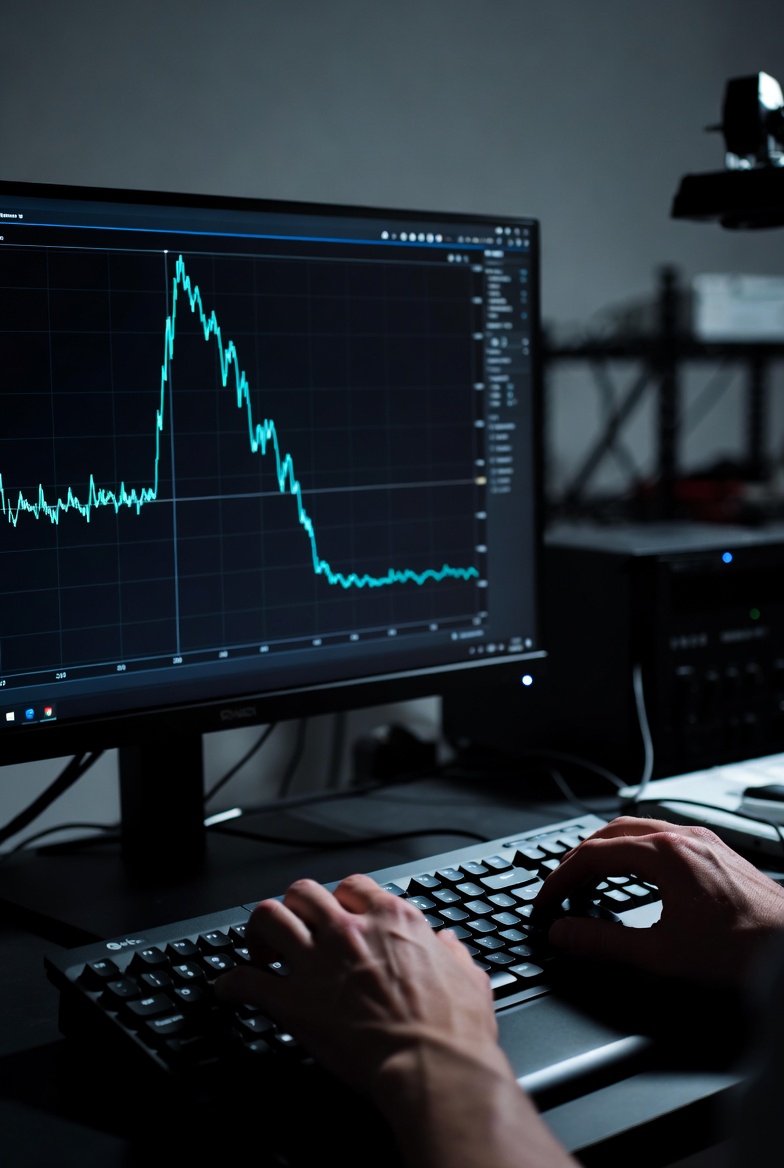
We’re building a research-backed, privacy-respecting approach to detect the onset of hijack states and help people regain control, especially when language arrives too late.
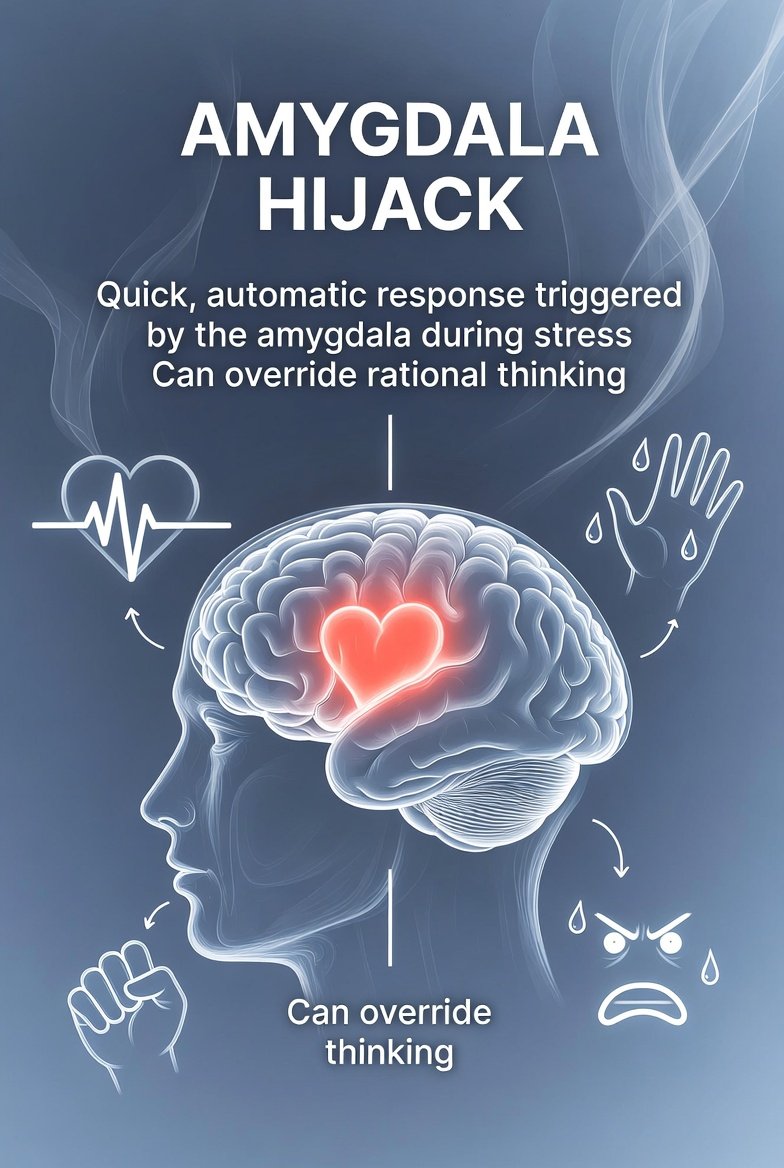
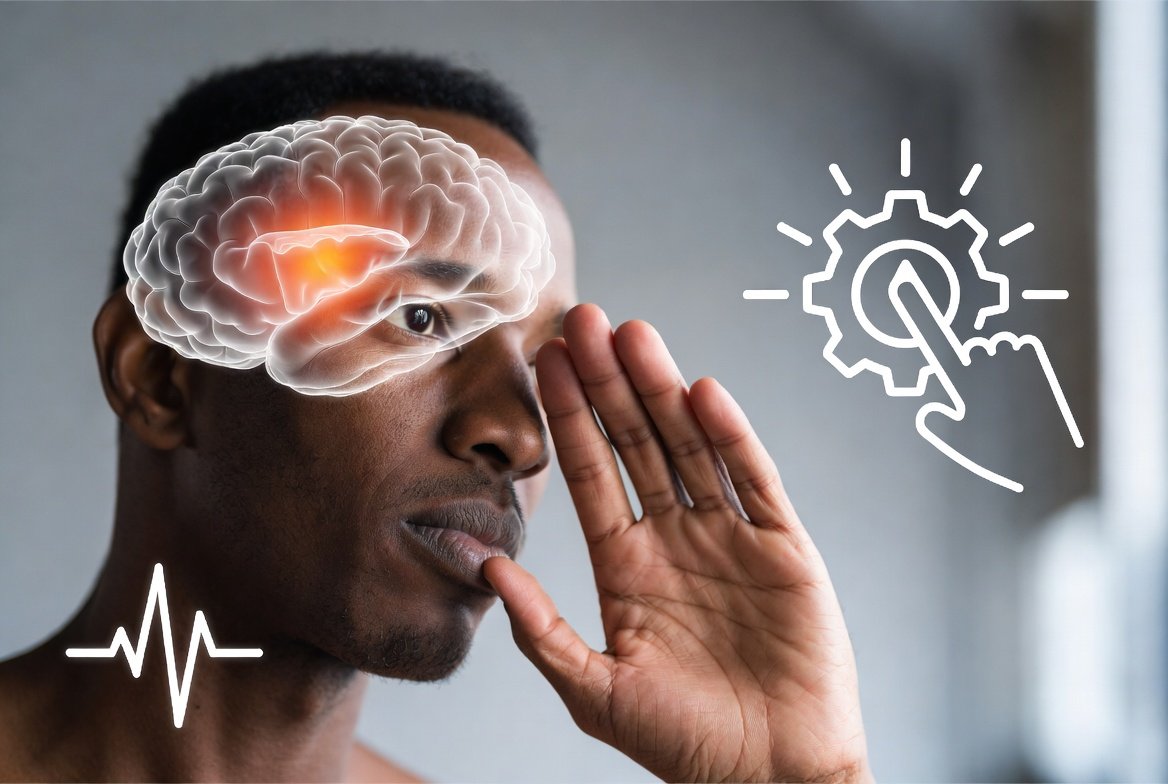
We’re exploring how AI + neuroscience can identify early, pre-verbal signals of an Amygdala Hijack, the moment when autonomic responses override choice and reasoning. This is an early-stage research initiative. We do not provide medical advice, diagnosis, or treatment.
Note: AmygdalaHijack.AI is under development. Content here is for information and research collaboration only and is not medical advice, diagnosis, or treatment.
We’re building a research-backed, privacy-respecting approach to detect the onset of hijack states and help people regain control, especially when language arrives too late.
We’re opening a collaboration path for university labs, clinicians, and applied researchers.
Get Updates
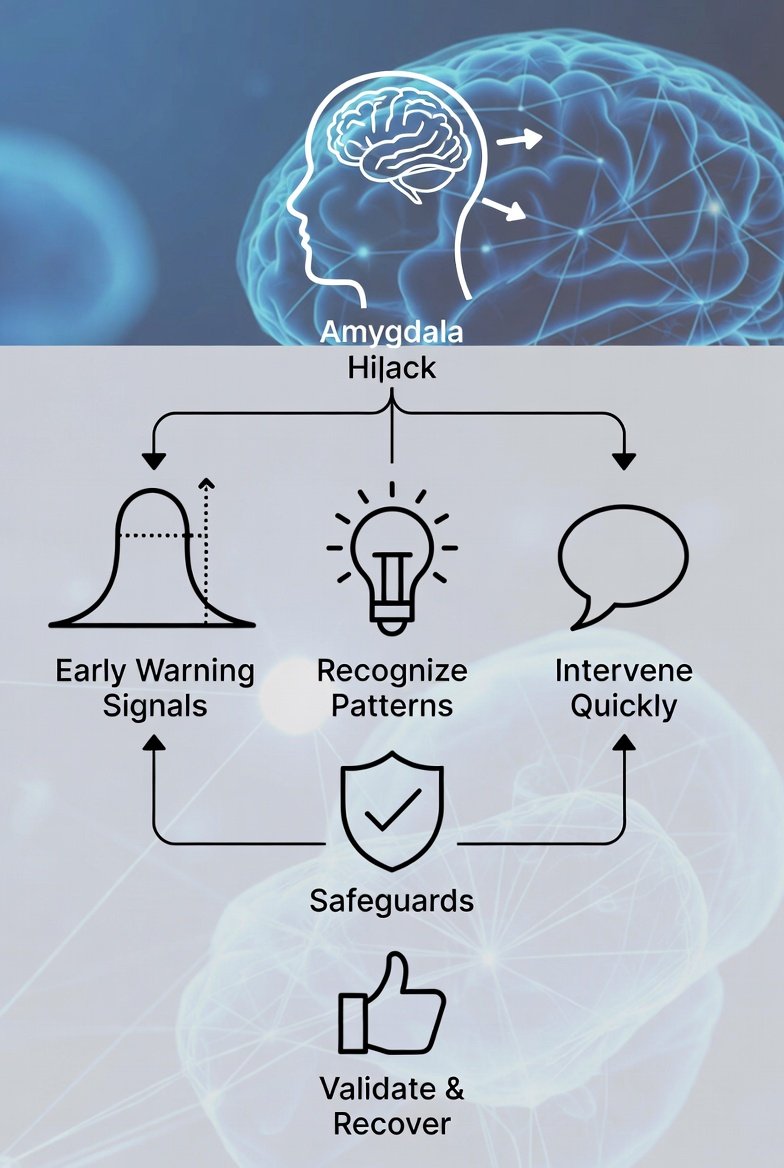
We are exploring measurable signals that precede hijack states, and how AI can support early warning + de-escalation. Our aim is prevention-first, with careful validation and collaboration.
Exploring non-invasive markers (timing, attention, stress signatures) that can be measured safely.
Developing models that infer risk states from signals—without labeling or judging people.
Designing gentle, user-controlled “brakes” (breath cues, pacing, prompts) that restore autonomy.
Building protocols for evaluation, bias checks, privacy safeguards, and clinician collaboration.
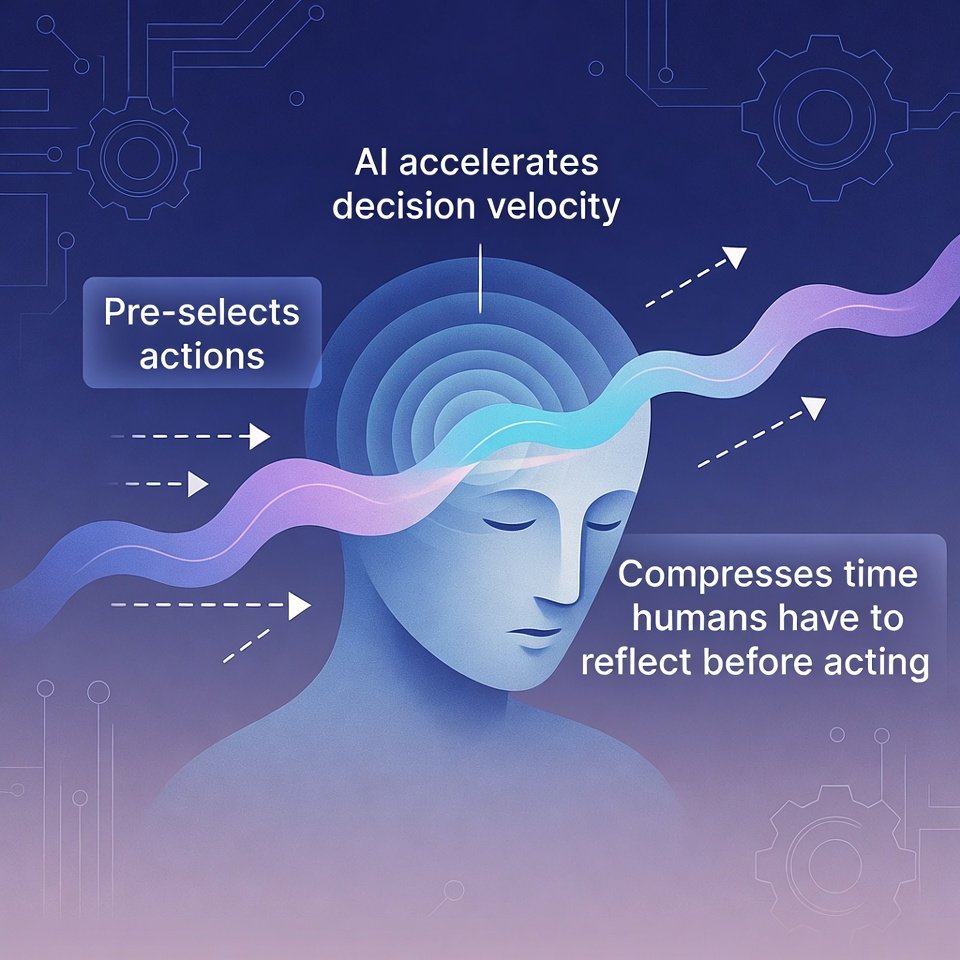
When autonomic signals escalate, the nervous system can override deliberate choice in seconds. We’re building an AI assisted early warning layer that helps people notice the shift earlier and supports recovery of autonomy, without diagnosing, labeling, or replacing clinicians or personal judgment.
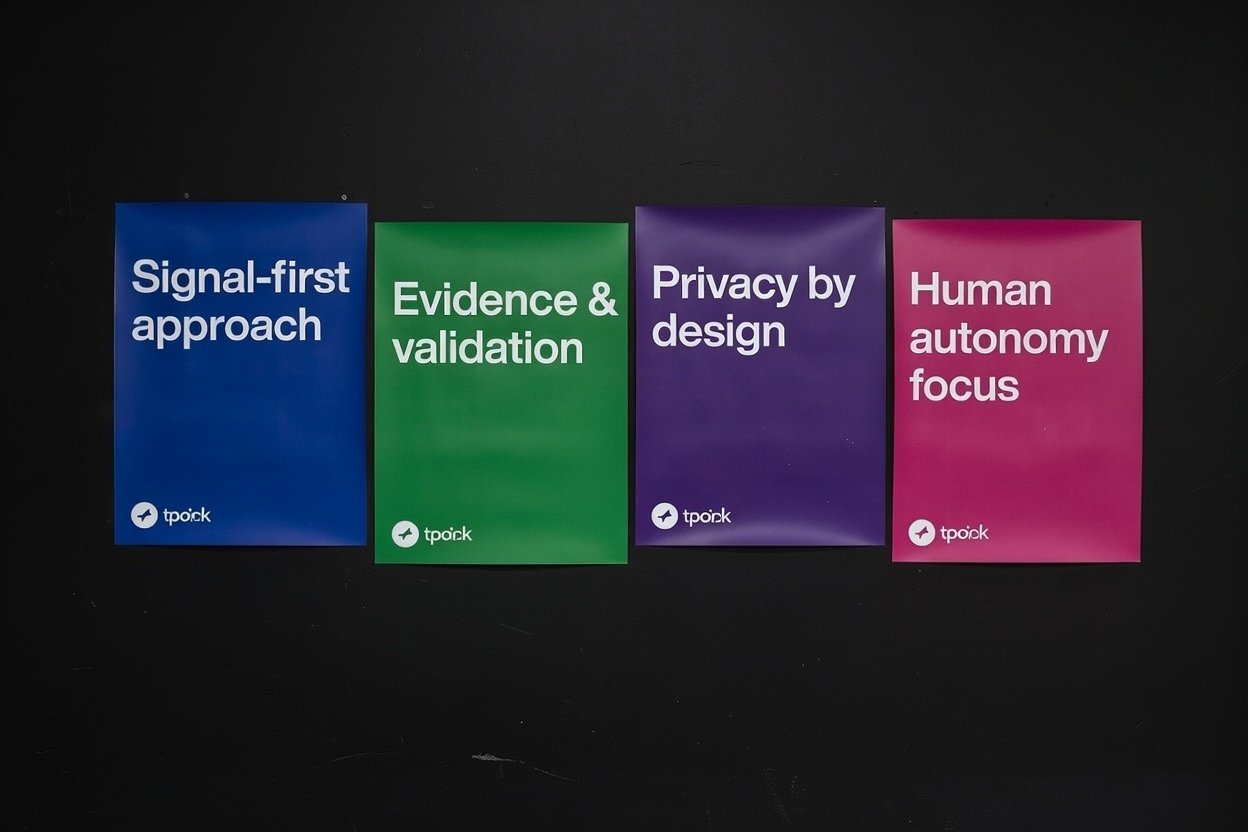
We will not diagnose, label, or “score” people. The goal is awareness, warning, and safer choices.
We are seeking partnerships with university labs and medical professionals to validate methods responsibly.
We’re translating neuroscience into practical, measurable signals. The goal is to reduce “autonomy loss” moments in everyday life—work, parenting, conflict, and high-stakes situations—through early detection and user-controlled interventions.
Catch the hijack earlier than language, then slow the cascade before decisions become irreversible.
Identify candidate signals that correlate with acute stress shifts (non-invasive, privacy-aware, clinically relevant).
Define hypotheses, datasets, and validation methods with clinicians and researchers before building product claims.
Develop transparent evaluation: false positives/negatives, bias checks, and “when not to use” boundaries.
We invite university professors and medical professionals to help steer research and validation.
We start with observation, then move to modeling, then careful testing. We publish what we can, partner where we must, and keep claims conservative until evidence supports them.
Identify candidate non-invasive signals linked to stress shifts (attention, timing, autonomic proxies).
Design models that detect state transitions and define safe thresholds (minimize false alarms).
Work with medical professionals and researchers to validate methods and define “do not use” boundaries.
We’re pre-launch. Join the waitlist for early access to the first prototype, or subscribe for research updates. If you’re a university professor or medical professional, you can also collaborate with us.
Get early access when the first research-backed prototype is ready.
Follow our research, experiments, and milestones as we build.
AmygdalaHijack.AI is an early-stage research initiative. These answers explain our intent, boundaries, and current focus.
An amygdala hijack refers to a rapid biological shift where threat-response circuitry can temporarily override calm reasoning and choice. People often recognize it afterward (“I snapped,” “I froze,” “I reacted without thinking”). Our work focuses on identifying the earliest measurable signals before that override fully takes hold.
No. AmygdalaHijack.AI is not a medical device, diagnostic tool, or provider of medical advice or treatment. We are conducting research into non-invasive, signal-based detection and user-controlled recovery support. Clinical decisions should always be made with qualified professionals.
We are starting with signal discovery and validation. That means identifying candidate indicators—such as timing shifts, attention changes, or autonomic proxies—and testing whether they reliably precede autonomy loss with minimal false alarms. Recovery support comes later, only after detection is well understood.
Yes. We are seeking collaboration with university researchers, clinicians, and applied neuroscience teams. Partners help define ethical boundaries, validation protocols, bias checks, privacy safeguards, and clear “do not use” conditions. Collaboration ensures this work remains responsible and evidence-driven.
You can join the waitlist or subscribe for updates using the form below. Subscribers receive concise research notes, milestone updates, and invitations to pilots when appropriate. We prioritize signal over noise and keep communication intentional.